Shravanabelagola is one of India’s most important Jain pilgrimage centres and one of Karnataka’s most visited heritage destinations. Located in Hassan district, Shravanabelagola is world-famous for the towering monolithic statue of Lord Gomateshwara (Bahubali) atop Vindhyagiri Hill. This complete guide covers the history, significance, temples, hills, the grand Mahamastakabhisheka festival and everything you need to plan a visit to Shravanabelagola.
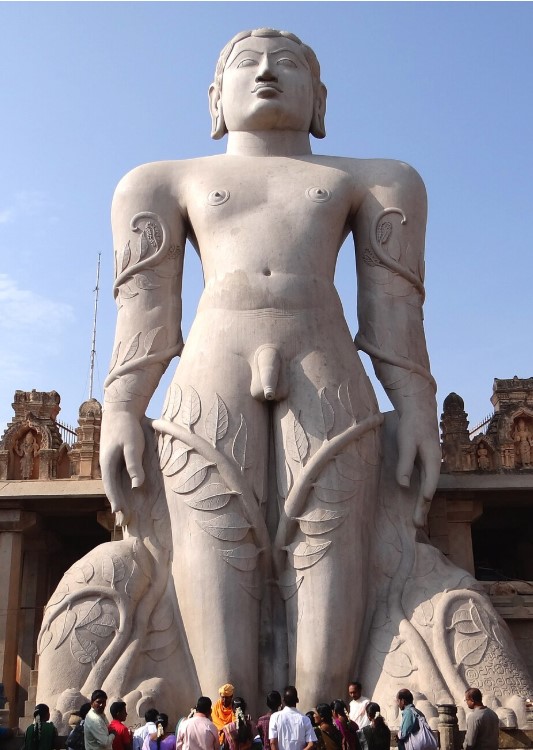
Table of Contents
Shravanabelagola at a Glance
Shravanabelagola sits in the Channarayapatna taluk of Hassan district in Karnataka, roughly 144 km from Bengaluru and about 83 km from Mysuru. The name is derived from the Kannada words shravana (a revered Jain ascetic), bel (white) and kola (pond) — a reference to the white pond that lies between the town’s two hills. For more than a thousand years, Shravanabelagola has been a living centre of Digambara Jain faith, art and philosophy.
The town is framed by two rocky hills — Vindhyagiri and Chandragiri — with a sacred tank in between. Pilgrims and travellers come to Shravanabelagola primarily to see the Gomateshwara statue, but the site rewards a longer visit with its ancient basadis, inscriptions and serene hilltop views.
History and Significance
The history of Shravanabelagola stretches back more than 2,000 years. According to Jain tradition, the Mauryan emperor Chandragupta Maurya renounced his throne, became a disciple of the Jain saint Bhadrabahu, and spent his final years in penance on Chandragiri hill. This association makes Shravanabelagola one of the oldest continuously significant sites in Jain history.
The town flourished under the Western Ganga dynasty and later the Hoysalas. Its greatest landmark, the Gomateshwara statue, was commissioned around 981 CE by Chavundaraya, a general and minister of the Ganga king. Over the centuries, Shravanabelagola accumulated hundreds of inscriptions in Kannada, Sanskrit, Prakrit, Marathi and Tamil, making it a priceless archive for historians studying South Indian Jainism.
The Gomateshwara (Bahubali) Statue
The centrepiece of Shravanabelagola is the colossal statue of Lord Gomateshwara, also known as Bahubali. Carved from a single block of granite, this monolith stands about 57 feet (roughly 17 metres) tall on the summit of Vindhyagiri and is counted among the tallest free-standing statues in the world. Bahubali is depicted in the kayotsarga posture of meditation, with creepers climbing his legs and arms — a symbol of his deep, unbroken penance.
The statue represents the ideal of complete renunciation and inner victory. For a detailed look at its carving, symbolism and history, see our dedicated guide to the Gomateshwara (Bahubali) statue.
Vindhyagiri and Chandragiri Hills
Shravanabelagola is defined by its two hills. Vindhyagiri (also called Doddabetta or Indragiri) is the larger hill and hosts the Gomateshwara statue at its top, reached by climbing over 600 rock-cut steps. Chandragiri (Chikkabetta), the smaller hill, is dotted with beautiful basadis and is closely tied to the legend of Chandragupta Maurya and the saint Bhadrabahu.
Both hills offer sweeping views of the town and the surrounding plains. Read our full guide to Vindhyagiri and Chandragiri hills for what to see on each and how to climb them.
Jain Temples (Basadis) of Shravanabelagola
Beyond the giant statue, Shravanabelagola is home to numerous exquisitely carved Jain temples, known as basadis. Notable examples include the Chandragupta Basadi, Chamundaraya Basadi, Bhandari Basadi and Akkana Basadi, several of which showcase fine Hoysala-era craftsmanship. Explore them all in our article on the Jain temples and Basadis of Shravanabelagola.
Mahamastakabhisheka Festival
The most spectacular event at Shravanabelagola is the Mahamastakabhisheka, a grand head-anointing ceremony held once every 12 years. During the festival, the Gomateshwara statue is bathed with water, milk, saffron, sandalwood paste, turmeric, flowers and precious substances, watched by lakhs of devotees. The last major Mahamastakabhisheka was held in 2018, with the next expected around 2030. Learn more in our guide to the Mahamastakabhisheka festival.
How to Reach Shravanabelagola
Shravanabelagola is well connected by road. It is about 144 km from Bengaluru (roughly 3 to 3.5 hours by car), 83 km from Mysuru and 51 km from Hassan. The nearest town is Channarayapatna, about 12 km away, on the Bengaluru–Mangaluru highway (NH75). The closest major railway stations are Hassan and Mysuru, and the nearest airports are Mysuru and Kempegowda International Airport, Bengaluru. For detailed routes, distances and transport options, see how to reach Shravanabelagola.
Best Time to Visit and Timings
The best time to visit Shravanabelagola is between October and March, when the weather is cool and comfortable for climbing the hill. The hilltop can get very hot from April to June, so early morning visits are advised in summer. The Gomateshwara statue is generally accessible from early morning to evening; footwear must be removed before climbing, as the entire hill is sacred. Carry socks, as the stone steps get hot by midday.
Nearby Attractions
Shravanabelagola pairs beautifully with the famous Hoysala temple towns of Belur and Halebidu, making a classic heritage circuit in the Hassan district. Many travellers combine all three in a single trip. See our itinerary for the Belur, Halebidu and Shravanabelagola circuit. Other nearby draws include the temples of Channarayapatna and the surrounding rural Malnad landscape.
Travel Tips for Pilgrims
Wear comfortable clothing and carry water for the climb up Vindhyagiri. Those who find the 600-plus steps difficult can hire a doli (palanquin) carried by porters. Photography is usually allowed, but respect local customs and the sanctity of the shrines. Plan to spend at least half a day to cover both hills comfortably. For overnight visitors, see our guide on where to stay and eat in Shravanabelagola.
Frequently Asked Questions
1. Where is Shravanabelagola located?
Shravanabelagola is in the Channarayapatna taluk of Hassan district, Karnataka, about 144 km from Bengaluru.
2. How tall is the Gomateshwara statue at Shravanabelagola?
The Gomateshwara (Bahubali) statue is about 57 feet (approximately 17 metres) tall and is carved from a single block of granite.
3. How many steps are there at Shravanabelagola?
Visitors climb over 600 rock-cut steps to reach the Gomateshwara statue on Vindhyagiri hill.
4. When is the next Mahamastakabhisheka at Shravanabelagola?
The head-anointing festival is held once every 12 years. The last was in 2018, and the next is expected around 2030.