The famous Shiva temples in Bangalore are expressions of antiquity. These ancient temples are undeniably places where you can express your devotion devoutly. Let’s look into some of the famous and must-visit Shiva temples in Bangalore.
Someshwara Swamy temple, Halasur (Ulsoor)
The Someshwara Swamy temple in Halasur is one of Bangalore’s famous Shiva temples, dating back to the Chola period. However, Hiriya Kempe Gowda II, under the reign of the Vijayanagara empire, made major additions to the temple.
There are interesting legends associated with the temple’s consecration.
Kempe Gowda, who had ridden far from his capital, Yelahanka, and was tired, fell asleep under a tree. Lord Someshwara appeared in his dream and commissioned him to build a temple for him with the aid of buried treasure, which Kempe Gowda followed suit.
According to another legend, King Jayappa Gowda (1420-1450 CE) built the temple initially out of wood. Once, while returning from his hunting escapade, he fell asleep under a tree in the Halasur area. A man appeared in his dream and pointed out that he was resting on the spot where a Shiva Linga had been buried and that he should build a temple for the Lord there. Needless to say, the king acted in accordance with the divine instruction.
As per the third, the temple was constructed by the Chola kings. To support the view, there are Tamil inscriptions in the temple. However, the Kamakshi shrine in the temple complex was built by the Mysore kings. But, according to popular belief, Adi Shankara established the Sri Chakra there even before it was built.
There are many notable shrines dedicated to other deities. The temple complex features impressive stone decorative elements.
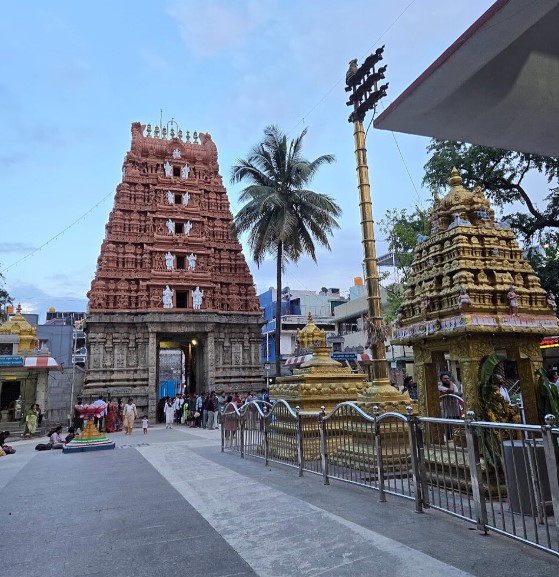
Kashi Vishweshwar temple, Kadugodi
Kashi Vishweshwar temple in Kadugodi is one of Bangalore’s famous Shiva temples, dating back to the Chola period of King Rajendra Chola. The locality of Kadugodi derives its name from this temple, which was once located in the middle of a forest. ‘Kadu’ means ‘forest’ and ‘Gudi’ means ‘temple’ in Kannada. However, the temple’s architecture bears a striking resemblance to that of the Ganga period, which preceded the Chola period. As per history, the land for the temple was given by the Chola emperors. The deity was acknowledged as Rajadhi Raja Bhangisvaram, as per the inscriptions at the temple’s basement. However, it was replaced with another one brought from Varanasi after it was stolen. The temple was built on the spot, as the River Dakshina Pinakini once flowed alongside.
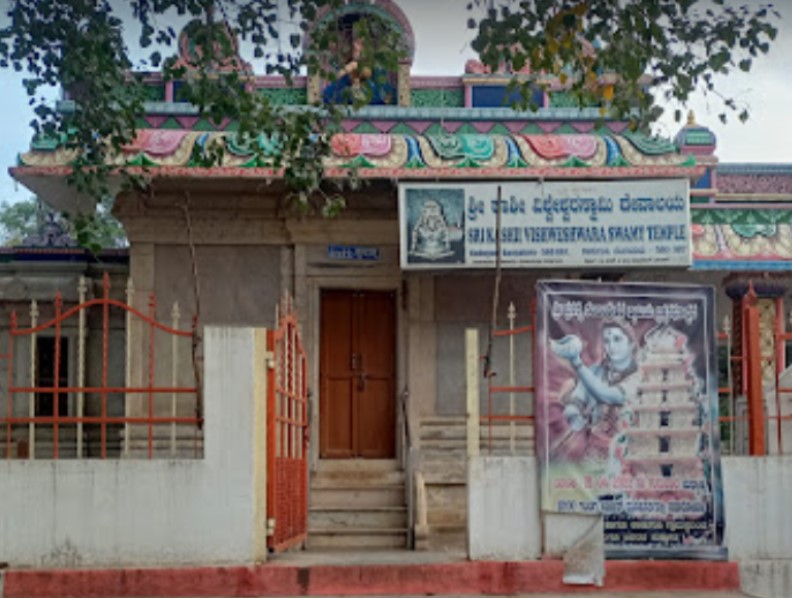
Gavi Gangadhareshwara Temple, Gavipuram
The Gavi Gangadhreshwara temple is a thriving example of Indian rock-cut architecture, making it one of Bangalore’s famous Shiva temples. The cave temple dates back to the years of the yore, as it was built by Gautama Maharishi and Bharadwaja Muni during the Vedic period. Kempe Gowda, the founder of Bangalore, renovated it in the sixteenth century after being released from a five-year prison term by Rama Raya.
The cave temple is carved from a single block of stone and features several monolithic sculptures. There are also other shrines dedicated to various deities.
A striking aspect of the temple is the sunlight falling on the Shivalinga from 13 to 16 January towards dusk and from 26 November to 2 December. It is to be noted that on Makar Sankranti, the sunlight passes through the horns of the Nandi and falls on the Shivalinga for an hour in the evening. People throng this temple on Makar Sankranti.
The Agnimurthy in the temple is said to cure eye defects. According to legend, there is a tunnel in the temple that leads to Kashi. However, two men who entered the tunnel did not return.
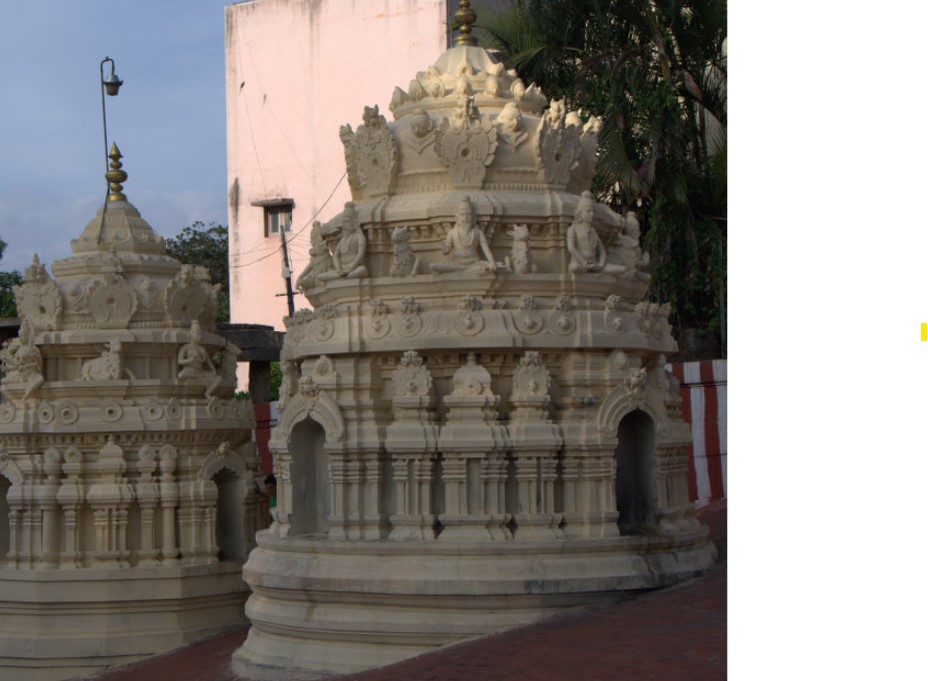
Kadu Malleshwara Temple, Malleshwaram
The Kadu Malleshwara temple, one of Bangalore’s famous Shiva temples, was constructed by King Venkojirao, the step-brother of the Maratha ruler Shivaji. The temple is built in the Dravidian style, and Lord Shiva here is addressed as Mallikarjun. The temple is known as Kadu Malleshwara, with the word ‘Kadu’ meaning ‘forest’ owing to the thick greenery in the surrounding area. A huge crowd throngs this temple on Maha Shivratri to worship the Lord.
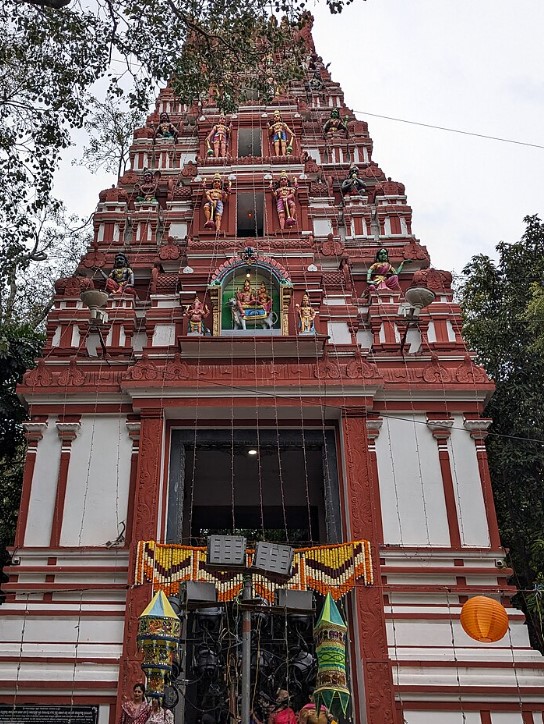
Sri Dakshinamukha Nandi Tirtha Kalyani Kshetra, Malleshwaram
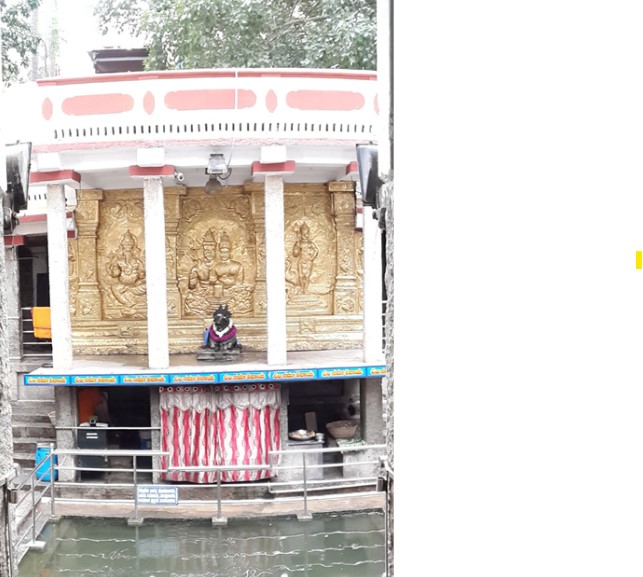
Sri Dakshinamukha Nandi Tirtha Kalyani Kshetra is another noteworthy temple of Lord Shiva in Bangalore. The temple is diagonally opposite the Kadu Malleshwara temple, in front of the Gangamma temple. The main highlight of the temple is that water flows from Nandi’s mouth and lands on the Shivalinga, and in turn flows into a stepped tank or ‘Kalyani’ in Kannada, and further channeled into a well outside the temple.
The Nandi here is South-facing, which is why it is called Dakshinamukha Nandi and is placed on a platform atop Lord Shiva’s shrine, with an opening in the floor for water to flow onto the Shivalinga. The source of the water to the Nandi’s mouth is from the Sankey Tank. The 400-year-old temple, which had been buried underground for a long time, was excavated in 1997. There are shrines dedicated to Lord Ganesha and the Navagraha. The temple sees huge crowds during Mahashivratri.
Panchalinga Nageshwara Temple, Begur
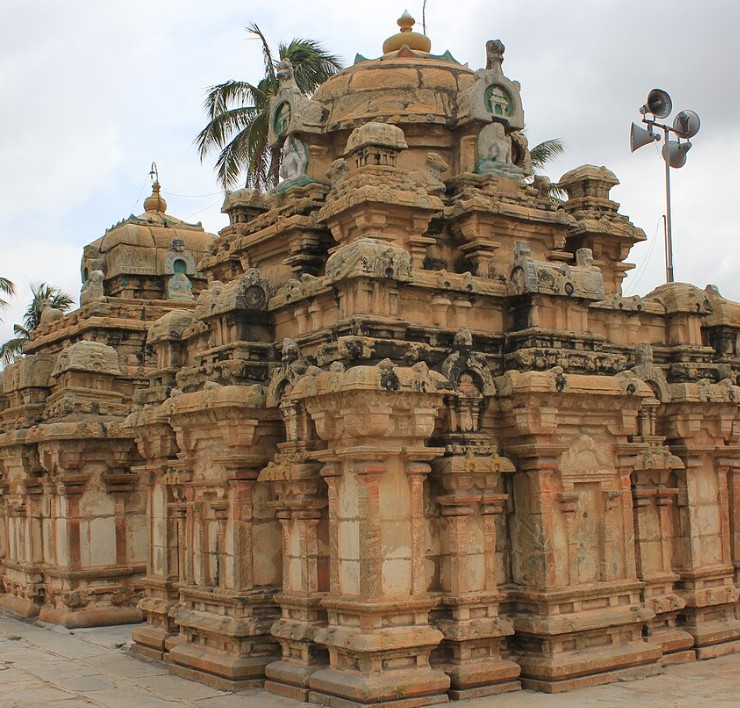
The Panchalinga Nageshwara Temple, Begur, is located about 6.8 kilometers from the Silk Board junction, Bangalore. The temple dates back over a thousand years. It is known as the Panchalinga Nageshwara temple owing to its five shrines dedicated to Lord Shiva. They are Nageswara, Nagareswara, Choleswara, Karaneswara & Kali Kamateswara. While the Nageshwara and Nagareshwara shrines were built by the rulers of the Ganga Dynasty, the Choleswara, Karaneswara, and Kali Kamateswara shrines were built by the rulers of the Chola Dynasty.
There are yantras painted on the ceilings and the floor of the halls. Meditating on specific spots on and below these Yantras is said to bring about positive energy. A stone in the temple with inscriptions attests to Bengaluru’s antiquity. Maha Shivratri and Brahma Rathotsava draw large crowds to this temple.
Also read
- Mahashivaratri – Worshiping Lord Shiva
- Top 10 Must Visit Temples in Bangalore
- Prasad Of Karnataka Temples Now At Your Doorstep: Here’s How You Order Online
- How To Offer E- Sevas At The Temples Of Karnataka
- Top 10 Must-Visit Jain Monuments In Karnataka