Makar Sankranti in Karnataka marks new beginnings, as it is the harvest season. It is celebrated with much joy with family, friends, and relatives. Locally known as Suggi Habba, Makar Sankranti is undoubtedly a joyous celebration of grandeur in Karnataka. Makar Sankranti festival in 2026 falls on 14th January.

Astronomical Significance of Makar Sankranti
The astronomical significance of the festival is that it marks the beginning of Uttarayana, the sun’s movement northward for a six-month period. Makar Sankranti refers to the event of the sun entering the zodiac sign of Makara (Capricorn). The Sanskrit term “Shankramana” means “to begin to move”. It usually falls on the 14th or 15th of January every year.
Makar Sankranti falls at the end of Winter and marks the beginning of longer days, significant for agriculture. The period is auspicious, as it calls for new beginnings and is important for both spiritual and material growth.
Significance of Makar Sankranti in Karnataka
Makar Sankranti in Karnataka is celebrated not only with the family but with the community at large. The preparations for Sankranti begin much earlier than the day of the festival, with getting rid of unwanted things in the house, whitewashing, and decorating it.
On Sankranti day, people wear new clothes and exchange sweets. Farmers in Karnataka express their gratitude to the Sun God for bestowing his radiance, which is much required for the growth of crops. As a result, they offer their first harvest of the season to the Sun God.
Ellu Birodhu ritual
The Ellu Birodhu ritual is unique to Makar Sankranti in Karnataka. Ellu Bella is basically a mixture of white sesame seeds, fried gram, dry coconut, peanuts, and jaggery. In the ritual called Ellu Birodhu, Ellu Bella is distributed with the Kannada saying, “Ellu Bella thindu olle mathaadi” (Eat the mixture of sesame and jaggery, and speak only good words). By the practice of distributing ellu bella, it is evident that it is meant to foster friendship and forgiveness by doing away with enmity.
Kichchu Haayisuvudu ritual
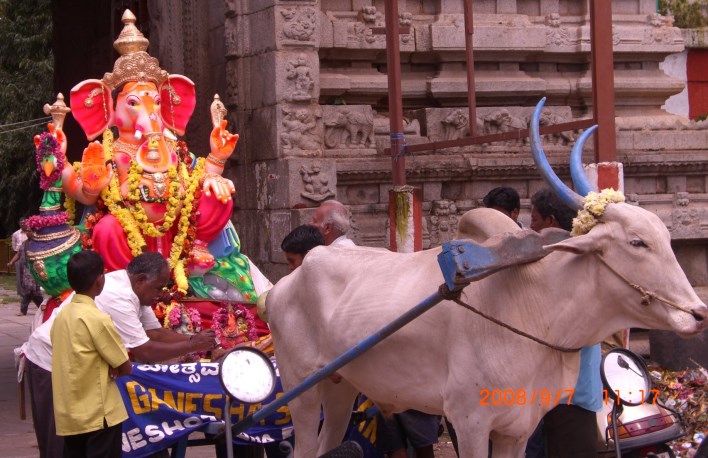
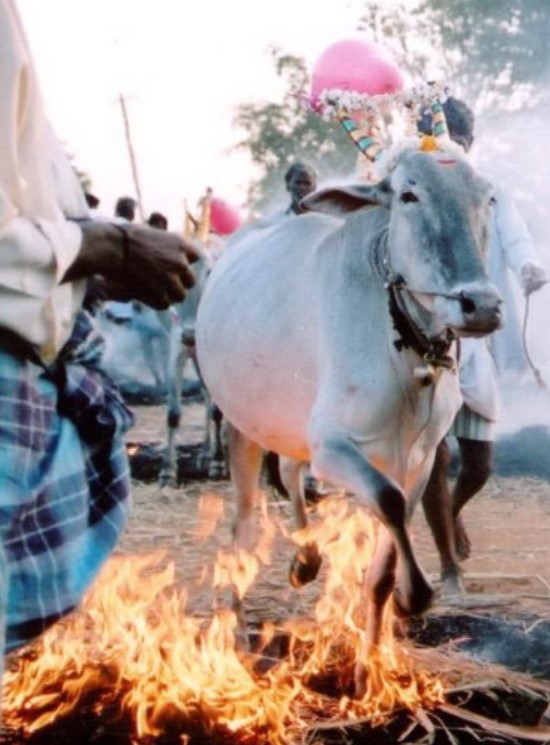
The Kichchu Haayisuvudu ritual is mostly practised in the Mandya region, where farmers decorate their bulls and lead them in a procession to the rhythm of drumbeats. In the evening, the bulls are made to run through a controlled fire. This is to get rid of ticks and fleas and improve hygiene among the animals.
Kite festival on account of the Makar Sankranti in Karnataka
The Kite Festival is an integral part of Makar Sankranti in Karnataka. Colourful kites soar high in the skies of Karnataka, especially in the northern regions.
What was once considered a practice for health reasons has now become a competitive, joyous sport, accompanied by other celebrations. Originally, elders encouraged people to fly kites early in the morning to expose their bodies to sunlight for Vitamin D absorption and to ward off winter ailments and infections.
The Kite Festival in Mangalore will be held on 17th and 18th January 2026 at Tannirbavi Beach. Hubli will celebrate the Kite Festival in February 2026, but the dates haven’t been finalized yet.
Special delicacies of Makar Sankranti in Karnataka
Huggi (Sweet Pongal), Kara Huggi (Sankranti Kichidi), Holige or Obbattu, and foods prepared with Avarekalu (Hyacinth beans) are some of the delicacies prepared for Makar Sankranti in Karnataka.
Ellu unde (Sesame balls) and Sajje Roti (Pearl millet bread with Bajji Palya) are also common in households.
Other significant activities and events
Makar Sankranti in Karnataka is accompanied by other significant events and activities.
- In the Gavi Gangadareshwara temple, Bangalore, on the Makar Sankranti day, precisely between 5 pm and 5.30 pm, people flock to see the sun’s rays falling on the Shivalinga in the sanctum.
- People of Karnataka also attend the Siddheshwar Jatre in Vijayapura ( Bijapur), a week-long fair. It’s a grand event, the highlight of which is the Nandi Dwaja procession amid fireworks. The popular cattle fair attracts large crowds and is an integral part of the celebration.
Makar Sankranti in other states
- Pongal – New year celebrated in Tamil Nadu
- Maghi – It is Punjab’s version of the festival
- Bihu / Bohaggiyo Bhishu – The people of Assam celebrate the festival with great enthusiasm
- Sankrat – The people of Rajasthan celebrate the festival with local cuisine. Kite flying is an integral part of celebrations.
- Makara Sankranti – Maharashtrians celebrate the festival by exchanging halwas that are colorful.
- Uttarayan – The people of Gujarat celebrate this festival with patang or flying kites.
- Magha Saaji – Magha Saaji is what people of Shimla call Sankranti
- Poush Sankranti – The harvest festival goes by this name in West Bengal
To conclude, Makar Sankranti in Karnataka embraces people from all walks of life, and they celebrate it with much joy and happiness.